
What is Kambo?
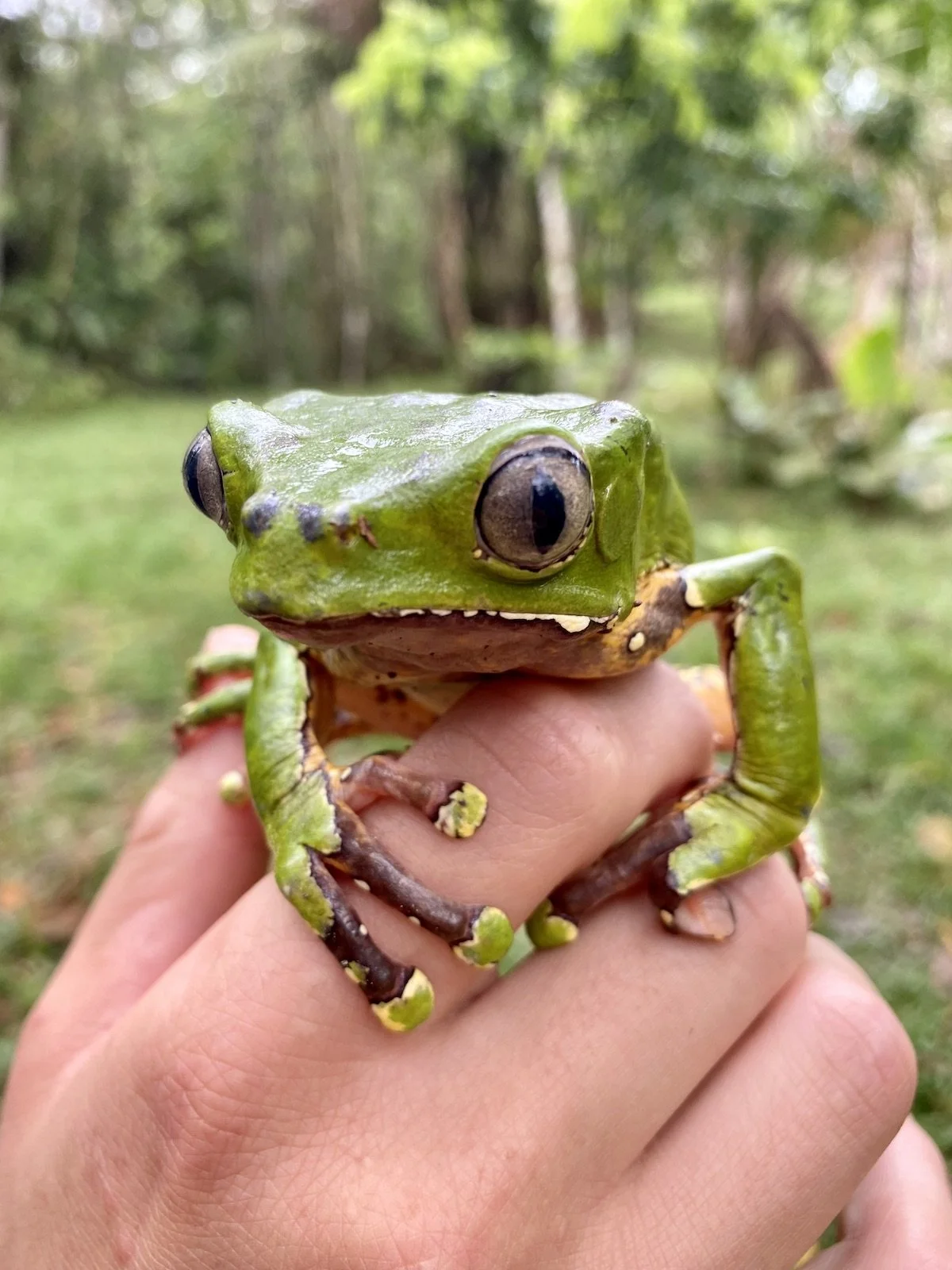
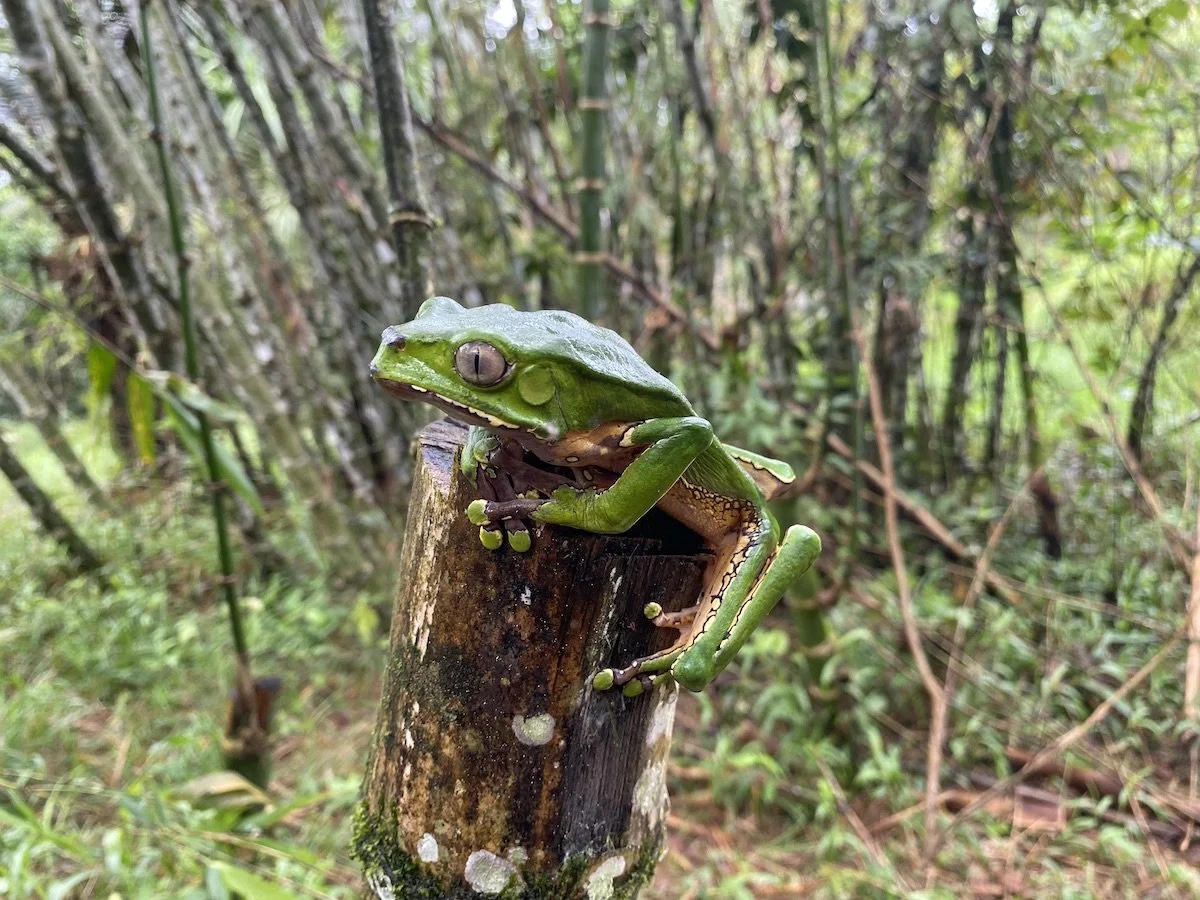
Kambo is a secretion collected from the Phyllomedusa bicolor, a large tree frog native to the Amazon rainforest. It has been used by indigenous communities in Peru and Brazil for centuries as a medicine for physical strength, immune resilience, and the clearing of what they call panema, a word that roughly translates as stagnant energy or bad luck. Today it is gaining growing interest in Europe and around the world as a powerful tool for physical detoxification, immune support, and mental reset.
This page covers what kambo is, where it comes from, what happens during a session, the science behind it, and who it is suited for.
What happens during a Kambo session?
A kambo session begins with an intake conversation and health check. A responsible practitioner will not proceed without understanding your health background and current situation.
The application itself is straightforward. Small superficial burns are made on the top layer of the skin, typically on the arm or leg. These are called gates or points. The kambo is applied to these points as small dots. Because the lymphatic system lies just beneath the skin, the peptides are absorbed rapidly, typically within 30 to 60 seconds.
What follows is an intense but short experience. The body responds strongly: the face flushes, the heart rate increases temporarily, and most people experience nausea and purging within a few minutes. This is the body's cleansing response to the peptides and is a central part of how kambo works. The acute phase lasts around 20 to 40 minutes. After that the points are removed, the gates are dressed with a natural tree sap called Sangre de Grado, which helps the skin heal cleanly, and you rest.
The full session including preparation and recovery typically takes two to three hours. Most people describe feeling significantly lighter, clearer, and more energised in the days that follow.
Where does Kambo come from?
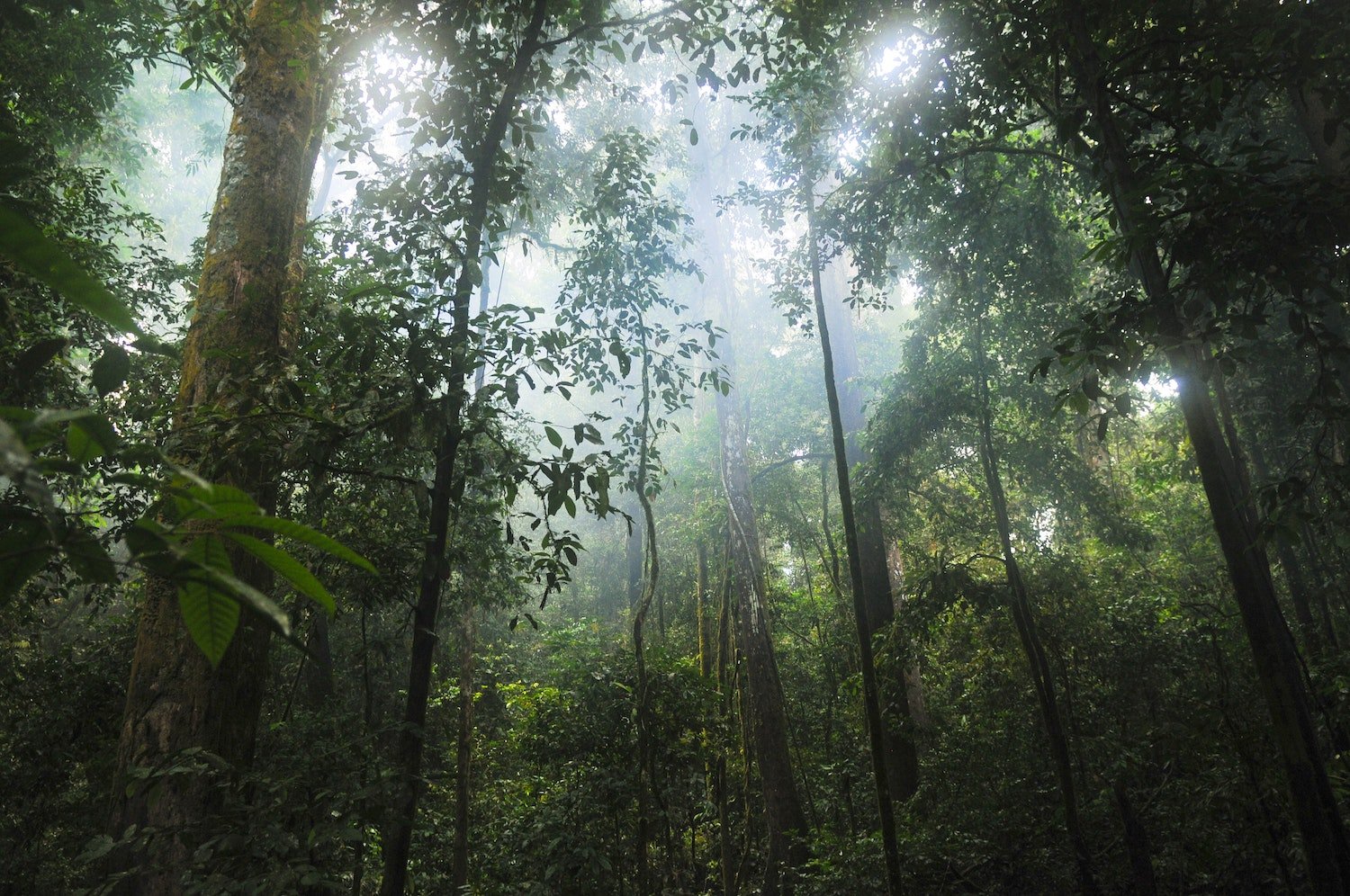
The Phyllomedusa bicolor is one of the largest tree frogs in the Amazon. It lives high in the jungle canopy, typically 20 to 50 metres above the ground, and has no natural predators. The secretion it produces is not a venom in the traditional sense. It does not cause harm to the frog and is not intended as a defence mechanism. It is a complex chemical cocktail that the frog produces naturally, collected by indigenous practitioners by gently scraping the skin while the frog is temporarily held. The frog is then returned to its habitat unharmed.
The secretion is dried onto wooden sticks and mixed with water before use. Different tribes in the Amazon have their own names for it. The Matsés call it Dow-Kiet. In Peru it is often called Sapo. In Brazil it is known as Vacina da Floresta, which translates as the vaccine of the forest, a name that reflects how indigenous communities understand its role in building physical and energetic resilience.
Kambo has been used ceremonially for centuries by tribes including the Matsés, the Katukina, and the Mayoruna, primarily to prepare warriors and hunters for endurance and to treat conditions including fever, infection, and malaria. It is now practiced in healing contexts across Europe, North America, and Australia.
Is Kambo psychedelic?
No. This is one of the most common misconceptions about kambo. It does not produce hallucinations, visions, or altered states of consciousness. You remain fully aware throughout the entire session. There is no DMT, psilocybin, or any other psychoactive compound in kambo.
What kambo does produce is an intense physical experience. Some people describe a sense of emotional release alongside the physical purge, and many report a lasting sense of mental clarity in the days after. But this is not the same as a psychedelic experience. The mechanism is entirely different.
If you are interested in how kambo compares to plant medicines that are psychedelic, the kambo vs plant medicines page covers the differences in detail.
The science behind Kambo
Scientific interest in kambo has been growing since the 1980s, when researchers first began isolating and studying the peptides in the Phyllomedusa bicolor secretion. One of the most significant early researchers was Vittorio Erspamer of the University of Rome, who described kambo as "a fantastic chemical cocktail with potential medical applications unequalled by any other amphibian." Erspamer was also the researcher who discovered serotonin, which gives some context to the credibility of his assessment.
Over 70 medical patents have been filed for compounds isolated from kambo, primarily in the United States, highlighting the level of scientific interest in its constituent peptides. Research into the pharmaceutical potential of these compounds continues, though clinical applications have not yet been formalised.
The secretion contains a complex mixture of bioactive peptides. The main ones identified so far and their effects are:
Phyllomedusin stimulates the intestines, salivary glands, and digestive system, driving the deep cleansing process and contributing to the purging response.
Phyllokinin widens blood vessels and increases the permeability of the blood-brain barrier, improving circulation and allowing beneficial compounds to pass through more efficiently.
Phyllocaerulein has natural pain-relieving properties and helps regulate blood pressure. It supports the nervous system and contributes to the sedation and calm that many people feel after the acute phase passes.
Dermorphin has opioid-like properties and interacts with opiate receptors in the body. It is associated with the feelings of enhanced energy and mental clarity that many people report in the days following a session.
Adenoregulin has antimicrobial properties and has been studied for its effects on the immune system, including its ability to target drug-resistant bacteria.
A 2022 peer-reviewed review published in a scientific journal noted that various peptides identified in the secretion exert analgesic, vascular, and gastric effects in the body, and antimicrobial and anti-cancer effects in laboratory settings. Sage Journals The authors also noted that very little research has been done on the whole secretion as it is traditionally administered, meaning the synergistic effects of all the peptides working together are still not fully understood.
For a deeper look at the research and what the science currently supports, visit the science of kambo page.
It is worth being clear: while the science is genuinely interesting and the peptides are well-studied individually, kambo is not a clinically approved medical treatment. The benefits people report are real and consistent, but they are grounded in traditional use and growing scientific interest rather than completed clinical trials.
What is Kambo used for?
People come to kambo for a wide range of reasons. The most common are physical detoxification and the feeling of resetting the body, support for the immune system, increased mental clarity and focus, relief from fatigue and sluggishness that other approaches have not shifted, and emotional clearing alongside the physical purge.
Indigenous communities have traditionally used kambo to treat fever, infection, snake bites, and malaria, and to build physical stamina before hunting or battle. In the modern context, people typically seek it for the physical and mental reset it provides rather than as a treatment for a specific condition.
It is important to be clear that kambo does not cure disease. What it does is support the body's own systems: stimulating the immune response, flushing the lymphatic system, and clearing what many people describe as physical and emotional heaviness that has built up over time. The effects it produces are real, measurable, and well-documented in those who have worked with it. But they are not a replacement for medical care.
Who is Kambo suitable for?
Kambo is suitable for most healthy adults who are looking for a serious physical and energetic reset and who are prepared for an intense short experience.
It is not suitable for people with serious heart conditions, high blood pressure, epilepsy, or psychosis, or during pregnancy. Some medications are also contraindicated and need to be discussed before booking. A thorough health check before every session is non-negotiable.
If you are unsure whether kambo is right for you, the kambo safety page covers contraindications in detail. You are also welcome to get in touch directly before making a decision.
Kambo in Stockholm
Kambo ceremonies in Stockholm are offered by Sacha Warrior, a certified practitioner trained in traditional Amazonian methods. Sessions are held privately at your home or at a private location outside the city. Every session begins with a health intake and clear preparation guidance, and includes a follow-up call afterward.
If you are ready to book or want to ask questions first, visit the kambo ceremony Stockholm page or get in touch directly
Frequently asked questions
What does kambo feel like?
The first few minutes after application are intense. Most people experience a wave of heat through the face and upper body, followed by nausea and purging. Your heart rate increases temporarily. The sensation is strong but short. Most people feel the acute phase pass within 20 to 40 minutes and describe a deep sense of calm and clarity afterward. The days following a session are often when the most noticeable effects are felt: more energy, clearer thinking, and a general sense of having shed something that was weighing them down.
How is kambo different from ayahuasca?
Ayahuasca is a psychedelic brew that produces visions and a prolonged altered state lasting four to eight hours. Kambo is not psychedelic, produces no altered consciousness, and lasts under an hour in its acute phase. They work on different systems and serve different purposes. Some people use kambo as a preparation before sitting with ayahuasca, but they are completely distinct experiences.
Does kambo leave scars?
The gates heal within a few days and in most cases leave only small, faint marks. Darker skin tones may retain slightly more visible marks. The same gate points can be reused after a period of healing if you return for further sessions.
How many kambo sessions do I need?
Many people find a single session produces significant results. Others choose to work with the traditional Caboclo inoculation protocol, which involves three sessions within a 28-day period and is believed to produce the deepest and most lasting cleanse. The right approach depends on your situation and goals, which is something to discuss before booking.
Is kambo legal in Sweden?
Yes. Kambo is legal in Sweden and is not classified as a narcotic or pharmaceutical.